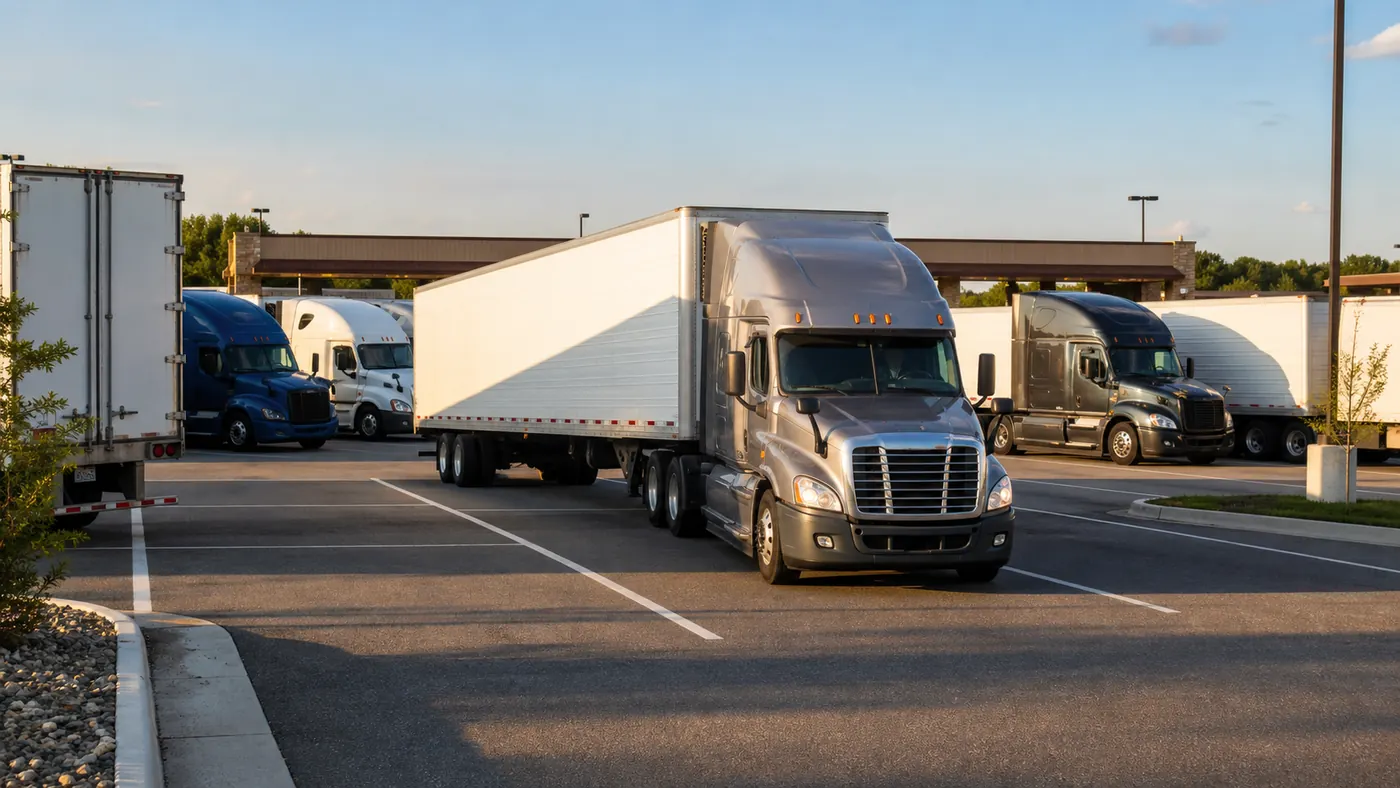
A fuel stop looks simple until it disrupts an entire driving day. A crowded diesel island, a station on the wrong side of the highway, a payment problem, or a stop made too late can cost time and create unnecessary stress. For long-haul truck drivers, fuel planning is part of trip planning.
The best stop is not always the location with the lowest posted price. Drivers and dispatchers also need to consider route access, available truck lanes, operating hours, parking, weather, traffic, fuel-card acceptance, and the driver's remaining hours. A slightly higher price at a reliable on-route location may produce a better result than a cheap stop that requires a long detour.
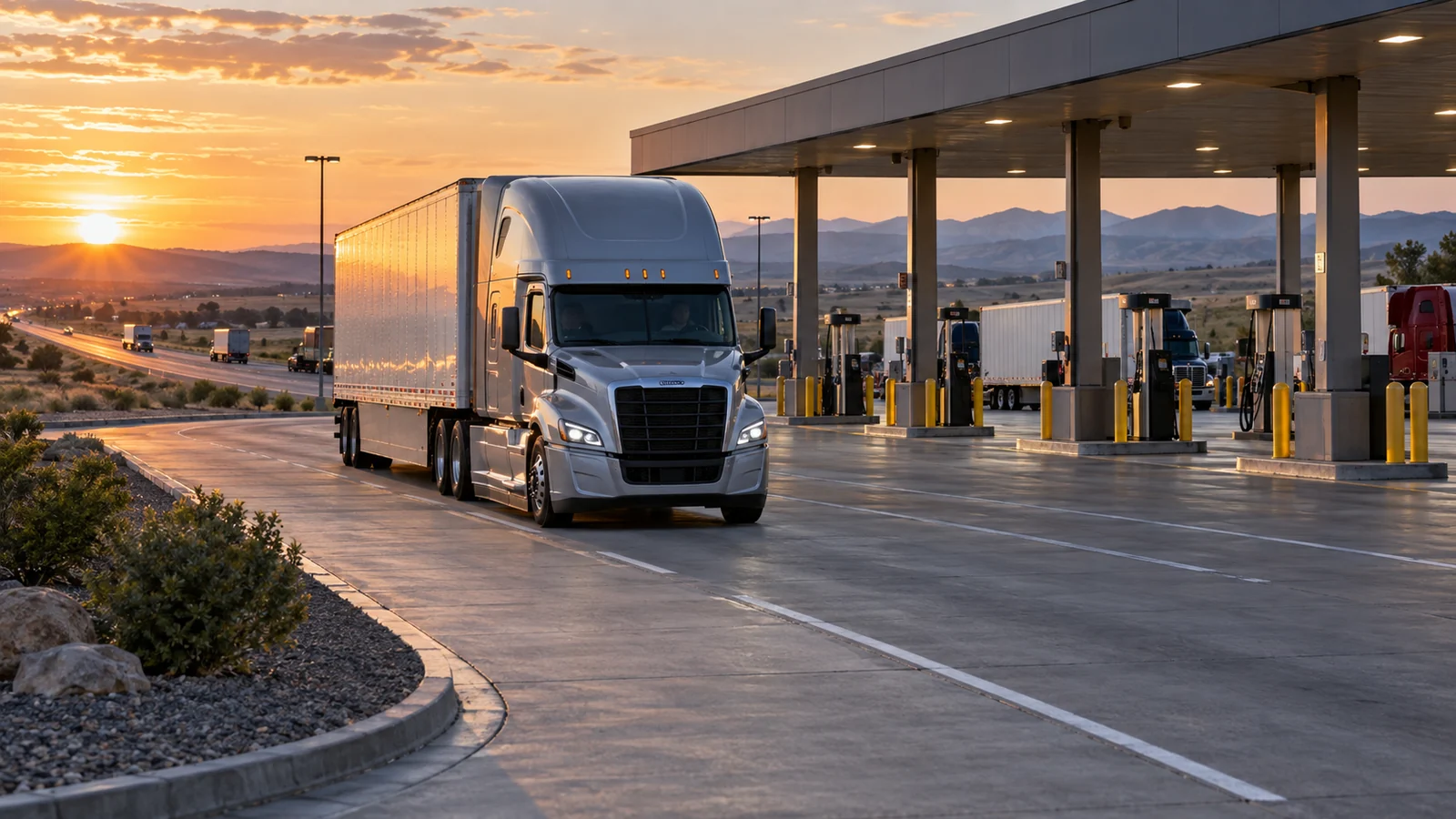
Start With the Truck's Real Fuel Range
Begin with a realistic estimate of how far the truck can travel before refueling. Tank capacity alone does not provide the answer. Fuel economy changes with gross weight, speed, terrain, wind, temperature, traffic, idling, and the tractor's condition. A heavy load crossing mountain grades will not have the same range as a light load on level interstate.
Use recent fuel-economy data from the same truck and similar routes. Then leave a sensible reserve instead of planning to arrive with nearly empty tanks. The reserve gives the driver room to respond to a closed station, a major detour, severe weather, or unexpectedly heavy traffic.
Mark More Than One Suitable Stop
A primary location and at least one backup make the plan more resilient. The alternate should be reachable without pushing the truck close to its minimum fuel level. Check whether both locations have commercial diesel lanes and enough space for the tractor-trailer.
For each candidate, review:
- Distance from the planned route
- Entrance and exit direction
- Truck-lane access and turning room
- Fuel-card and payment acceptance
- DEF availability when needed
- Operating hours
- Parking and rest facilities
- Recent construction or access restrictions
Satellite views and recent driver reports can help, but they do not replace posted signs or conditions at the location. Truck-safe navigation should guide the approach.
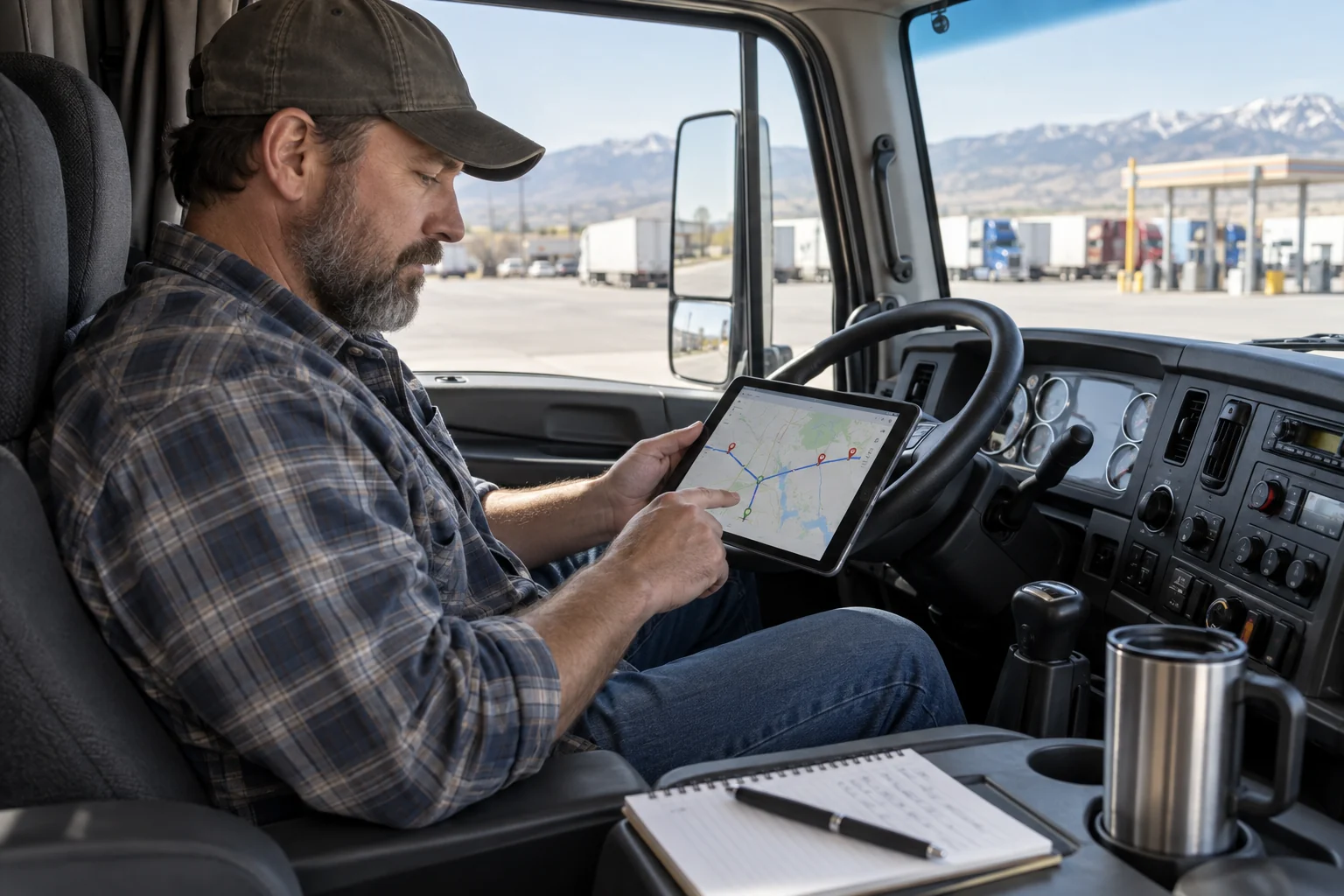
Fit Fueling Into the Hours-of-Service Plan
A fuel stop uses time even when the wheels are not moving. The driver may need to wait for a lane, fuel both tanks, add DEF, inspect the truck, collect a receipt, and return to the highway. Build that time into the schedule rather than treating it as an instant stop.
The Federal Motor Carrier Safety Administration explains that hours-of-service rules limit driving and on-duty time and require qualifying rest periods for covered drivers. The correct duty status for a stop depends on what the driver is doing and whether the driver has been relieved of work responsibilities. Drivers should follow current regulations and their carrier's logging policy rather than assuming every stop can be recorded the same way.
When possible, combine compatible needs. A planned fuel stop may also be a sensible place for a required break, meal, restroom visit, vehicle walk-around, or parking decision. Combining tasks can reduce repeated exits and preserve useful time later in the day.
Compare Total Cost, Not Only Pump Price
Price matters, especially across a fleet, but the useful comparison is the total cost of the stop. Add the off-route miles, expected waiting time, fuel used during the detour, and any lost productivity. Also account for fuel-network discounts and state fuel-tax reporting handled by the carrier.
For example, a station several miles away may advertise a lower price but require the truck to cross local traffic twice. An on-route location with an available lane may be cheaper after time and mileage are considered. Dispatch software can help compare options, but the driver still needs authority to adapt when actual conditions differ from the plan.
Choose the Timing Strategically
Waiting until the low-fuel warning appears limits every option. Plan early enough to skip a congested location and reach the backup safely. On familiar lanes, historical information can show which travel centers develop long lines at certain hours.
Parking also affects timing. If the driver intends to end the shift at a travel center, confirm whether parking is realistic before committing to the fuel stop. Fueling late in the day does not guarantee a legal space for the night. Sometimes it is better to fuel earlier and reserve the final stop for parking.
Use the Stop for a Quick Safety Check
Fueling creates a natural opportunity to walk around the equipment. From a safe position, the driver can look for visible tire problems, fluid leaks, loose components, damaged lights, cargo or door concerns, and anything that changed since the previous inspection. This brief check does not replace required inspections, but it can reveal a developing problem before the truck returns to highway speed.
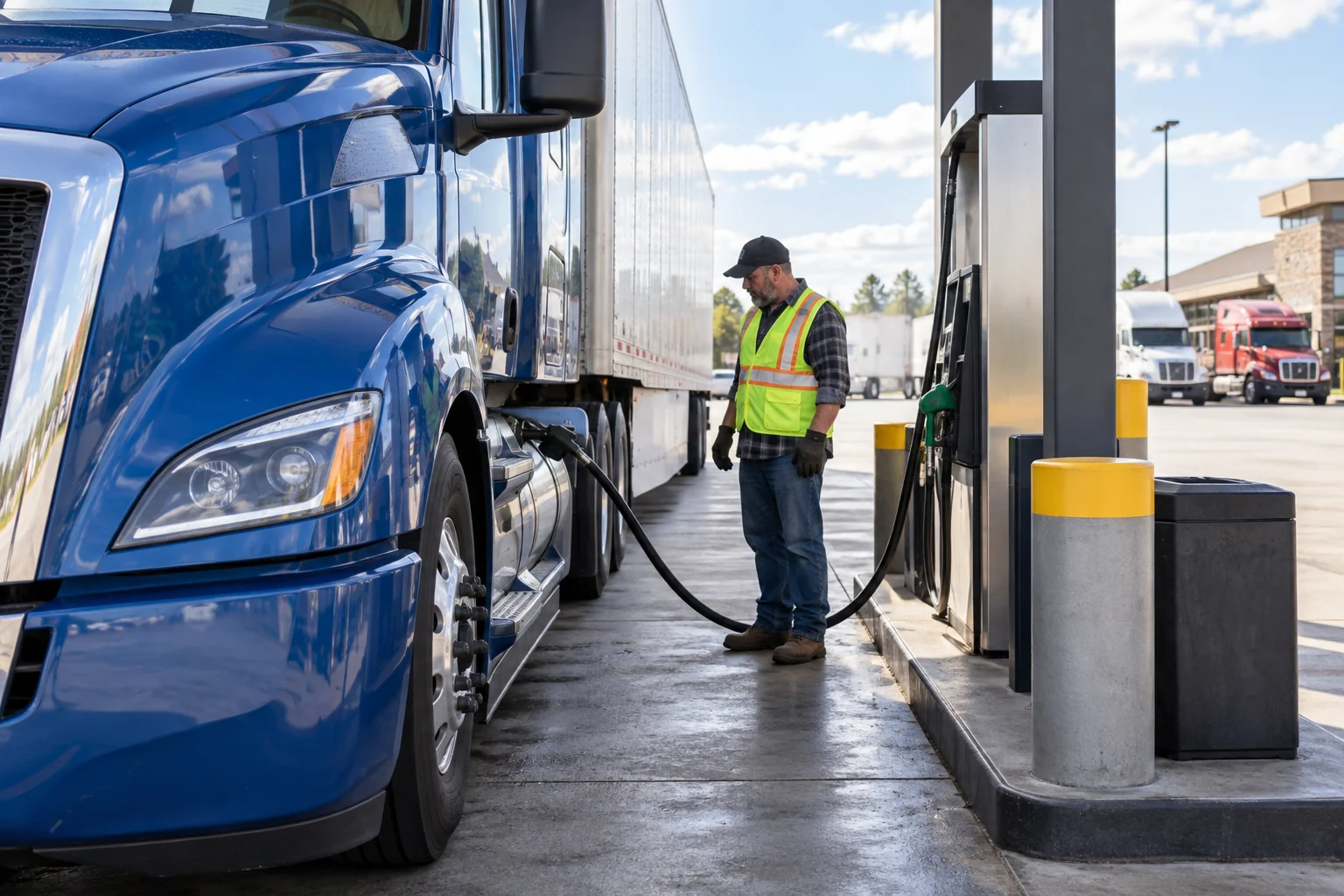
At the diesel island, move slowly, watch for pedestrians and other trucks, shut down and fuel according to facility and carrier procedures, and remain attentive to spills. After fueling, pull forward or move to designated parking before completing paperwork or buying food so the next driver can access the lane.
Reduce Unnecessary Idling
Long waits with the main engine running consume fuel without moving the load. EPA SmartWay says reducing unnecessary truck idling can save fuel, lower emissions, and cut operating costs. Drivers should follow carrier policy and use approved idle-reduction equipment when climate, cargo, and safety conditions allow.
Avoiding a known queue is often better than managing it after arrival. Real-time station information, communication with other drivers, and a usable backup stop can keep the truck moving without sacrificing the fuel reserve.
A Simple Fuel-Stop Checklist
- Estimate range from recent performance, load, terrain, and weather.
- Maintain a reasonable fuel reserve.
- Select one primary stop and at least one backup.
- Confirm commercial access, fuel-card acceptance, and DEF needs.
- Check the stop against driving and on-duty time.
- Compare pump price with detour miles and expected delay.
- Consider parking separately from fueling.
- Review the route while safely parked.
- Use the stop for a quick equipment walk-around.
- Move away from the fuel island before taking an extended break.
Final Thoughts
Good fuel planning protects more than the truck's range. It supports on-time delivery, legal scheduling, driver comfort, and predictable operating costs. The strongest plan uses real truck data, keeps a backup available, and gives the driver room to respond to conditions on the road.