
A semi-truck brake problem rarely announces itself with a single unmistakable failure. It may begin as a warning light, an air-pressure reading that behaves differently, a new sound, or a trailer that no longer slows in a straight line. Those changes deserve attention because a heavy combination vehicle needs a reliable braking system on every axle, in every traffic and weather condition.
This guide is about recognizing warning signs and responding safely, not diagnosing or repairing a brake system at the roadside. Inspection steps depend on the tractor, trailer, brake design, and carrier procedure. The Federal Motor Carrier Safety Administration (FMCSA) specifically urges drivers to complete pre-trip safety inspections, particularly for tires and brakes. If a defect may affect safe operation, the next step is to stop, report it, and have a qualified professional evaluate the equipment.
Why a Familiar Truck Still Needs a Fresh Check
A tractor can feel normal at the end of one trip and develop a problem before the next. Air lines, fittings, brake chambers, drums or rotors, linings, and electrical connections are exposed to vibration, road debris, weather, and repeated heat cycles. A trailer swap introduces another set of components that the driver may not know well.
Brake-related violations remain a major focus of commercial vehicle inspections. During its 2026 Brake Safety Week announcement, the Commercial Vehicle Safety Alliance (CVSA) emphasized properly maintained and functioning systems and highlighted drums and rotors. That focus does not mean every visible mark is a defect; it means a suspicious change deserves a careful review before the vehicle returns to service.
Use the inspection process taught for the equipment and required by the carrier. A driver should know what is normal for that particular truck: how pressure builds, which warning lamps should illuminate during startup and then clear, what the service brake feels like at low speed in a safe area, and what sounds the system normally makes. A change from that baseline is often the first useful clue.
Watch the Air-Pressure Gauges and Warnings
For an air-brake equipped truck, pressure readings and the low-air warning are safety information, not decorative dashboard lights. A warning that appears unexpectedly, pressure that will not build as expected, or a noticeable loss of pressure while the vehicle is stationary can indicate a problem. The exact checks and acceptable results must follow the vehicle manual, carrier procedure, and applicable CDL inspection standards rather than a number copied from another truck.
CVSA's Operation Airbrake inspection procedure includes the low-air warning device and air-loss rate among the items inspectors evaluate. Drivers should not assume that a warning is a harmless sensor issue or attempt to clear it by cycling the ignition. If the warning persists or pressure behaves abnormally, move to a safe location when possible, secure the vehicle, contact dispatch or maintenance, and follow the company's out-of-service procedure.
Listen during a parked inspection as well. A new sustained hiss near an air line, coupling, valve, or chamber may point to leakage, although normal systems can make brief sounds during operation. Avoid reaching into moving parts or crawling under an unsecured vehicle to investigate. Describe where and when the sound occurs so a technician can reproduce it safely.
Notice Changes in How the Truck Stops
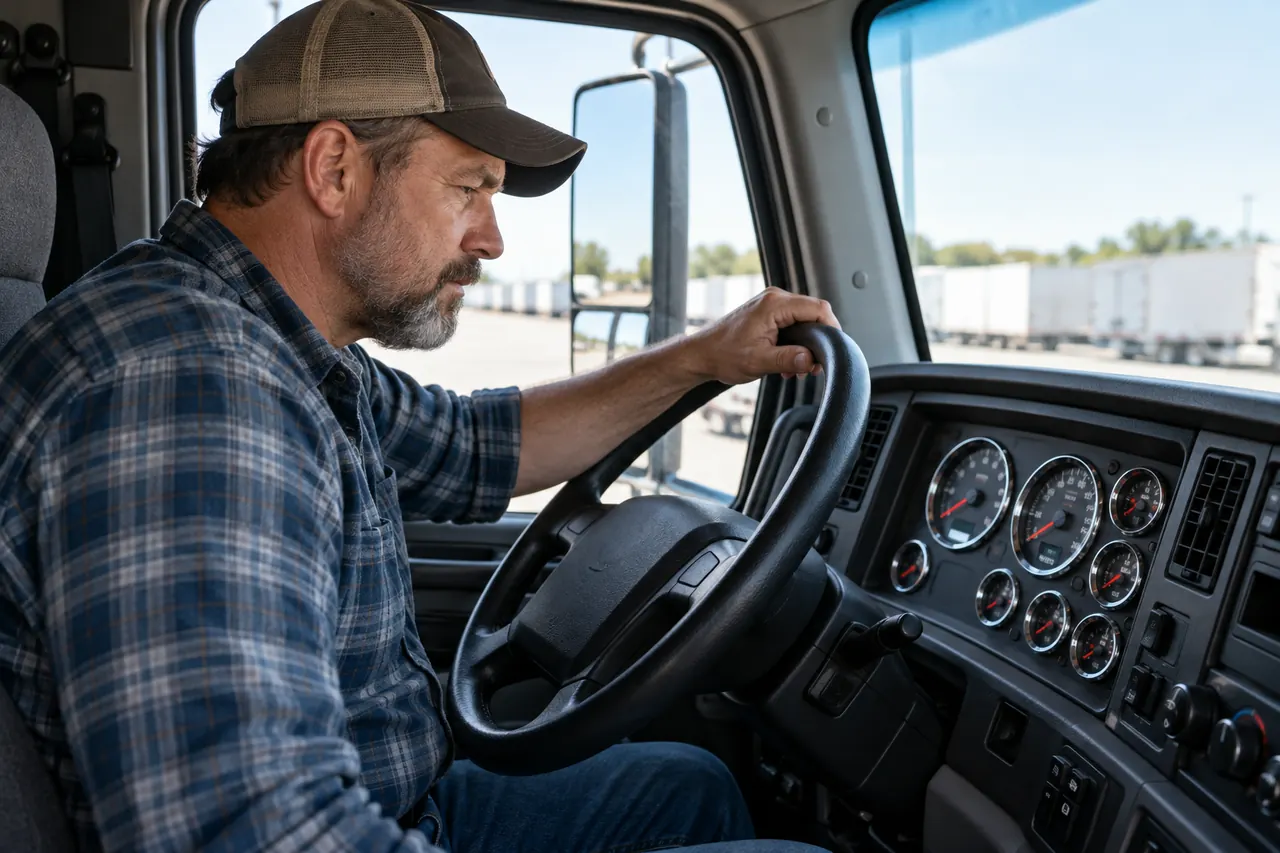
A truck that pulls to one side under braking, takes longer to slow, vibrates through the pedal or cab, or responds unevenly may have a braking issue or another mechanical condition that affects stability. Do not try to prove the symptom by making repeated hard stops on a public road. Reduce speed, increase space from other traffic, and pull over at the next suitable safe location if stopping performance feels abnormal.
Changes can be subtle on a long descent or in stop-and-go traffic. Drivers may compensate without realizing it by pressing the pedal earlier or harder. Compare what you feel with the normal behavior of the tractor and trailer together. After a trailer change, give the combination particular attention during the safe, low-speed checks specified by the carrier.
Noise matters when it is new or linked to braking: grinding, scraping, repeated knocking, or a squeal from one wheel area should be reported. Noise alone does not identify the failed part. It can also come from a wheel, suspension, tire, or road debris. A technician needs the location, conditions, and timing of the sound to diagnose it correctly.
Heat, Smell, and Smoke Are Urgent Clues
A strong hot-metal or burning smell near a wheel after ordinary driving is not something to ignore. A dragging brake or other wheel-end problem can generate heat; a wheel that appears unusually hot, discolored, or smoky needs immediate attention. Stop in a safe place and follow emergency procedures if there is smoke or a fire risk. Keep clear of the wheel and do not touch it to judge temperature.
CVSA's 2026 brake inspection focus calls attention to drums and rotors, including conditions that can affect braking efficiency. A driver can report visible damage or abnormal heat without trying to decide whether a component meets a technical limit. The maintenance team can inspect the system with the proper equipment and qualifications.
Repeated use of service brakes on a long grade can also reduce performance when brakes overheat. Plan grades and speed using the vehicle manufacturer's guidance and appropriate engine-braking methods. Never rely on a downhill run to “burn off” a suspected defect. If braking effectiveness changes, the safe response is to stop as soon as a suitable location is available and ask for assistance.
Do Not Overlook the Trailer and ABS Indicators
A tractor's good brake response does not prove that every trailer brake is working correctly. Look for damaged or disconnected air and electrical lines, unusual trailer-wheel behavior, and warning lamps that fail to behave as expected. CVSA's brake-system FAQ explains that an equipped unit's ABS malfunction lamp should illuminate and then go out when power is supplied. A lamp that stays on or never works as expected requires follow-up under the vehicle's procedure.
ABS is one part of the system; it does not replace properly functioning service brakes. Nor should a driver assume that a warning is irrelevant because the truck still stops. Report it with the tractor and trailer numbers, when the lamp appeared, and whether it changed after coupling or during the trip. Clear descriptions help maintenance distinguish an intermittent electrical issue from a continuing fault.
Document the Problem So It Can Be Fixed
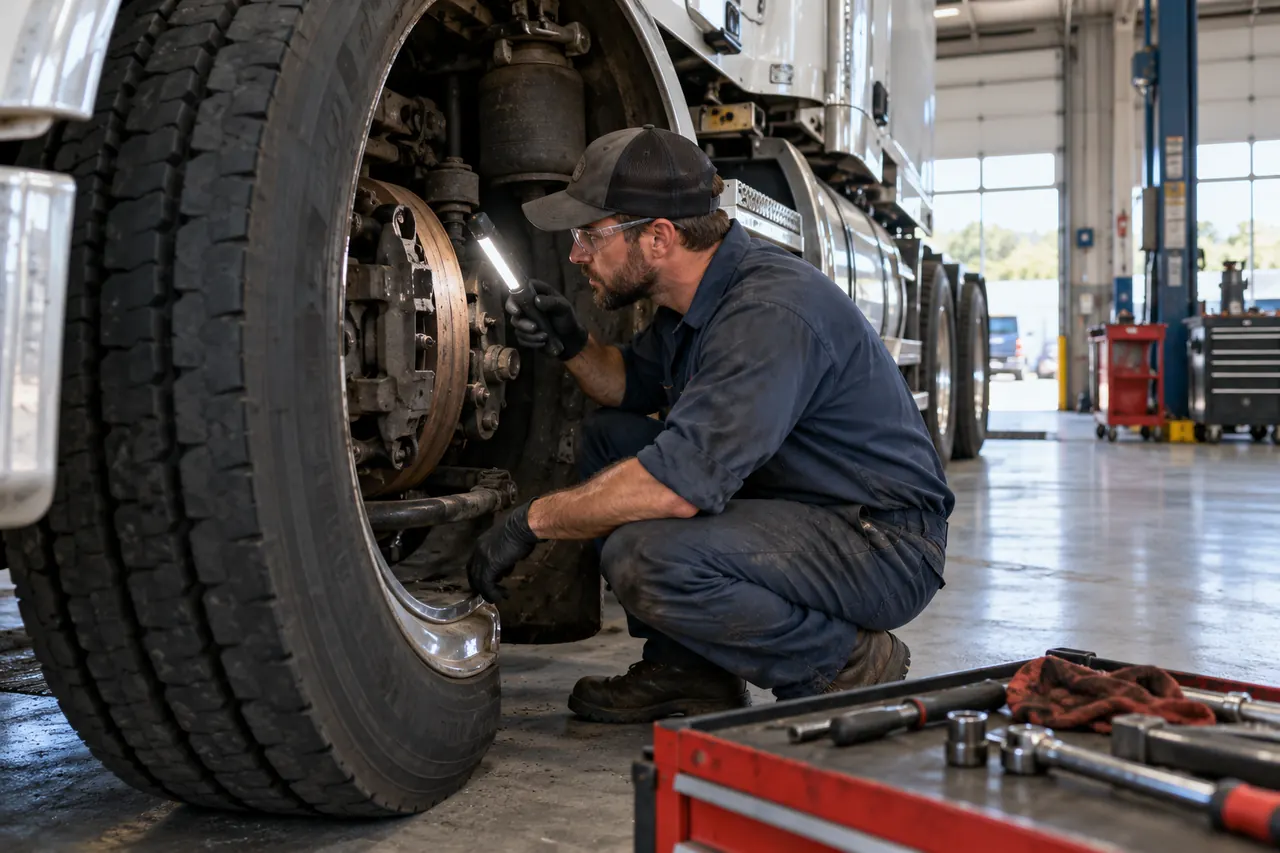
“Brakes feel bad” is hard for a shop to act on. Give the technician a short, specific account: which vehicle and trailer, the time and location, speed and road grade, whether the brakes were applied, what the gauges or lamps showed, any sound or smell, and whether the symptom repeated. Photographs can help when it is safe and permitted to take them. Do not erase fault codes or alter a component to make the warning disappear.
FMCSA's driver vehicle inspection report guidance covers reporting vehicle defects. Carrier procedures determine how a driver submits the report and receives confirmation of repair. The important operational point is that a potentially unsafe brake condition should be documented and resolved before the vehicle is dispatched again, rather than passed to the next driver as an informal verbal note.
When repairs are complete, review the repair documentation and perform the required pre-trip checks before departure. If the warning or handling problem remains, report it again. A work order marked complete does not change what the driver can see, hear, and feel in the vehicle.
A Practical Driver Checklist
- Follow the tractor and trailer pre-trip procedures before moving.
- Confirm warning lamps and air-pressure behavior match the equipment's normal pattern.
- Look and listen for visible damage, leaks, and unusual sounds from a safe position.
- Notice any pulling, vibration, delay, or change in stopping response.
- After a stop, watch for unusual smell, heat, or smoke near a wheel without touching it.
- Record a defect precisely and contact dispatch or maintenance.
- Do not continue a trip with a suspected condition that compromises safe braking.
The best brake safety habit is not to memorize a list of possible failures. It is to know the truck's normal behavior, take changes seriously, and bring qualified maintenance into the decision before a minor sign becomes a roadside emergency.