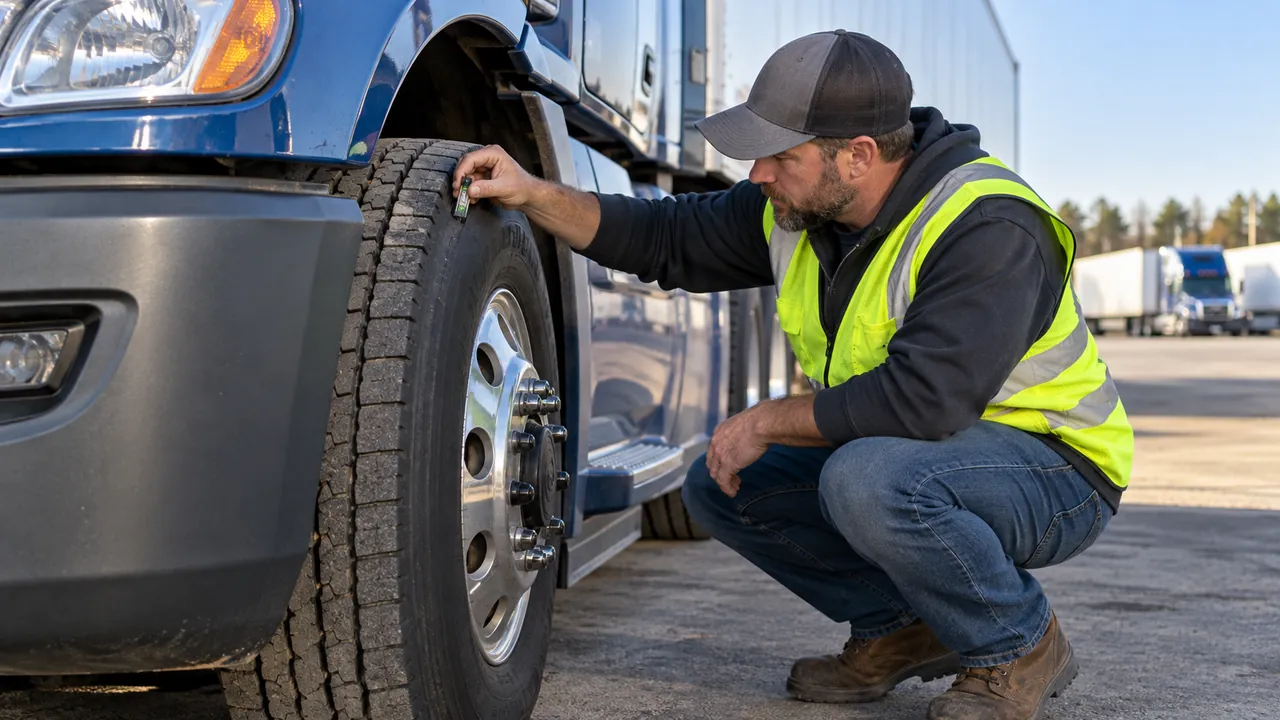
A tire problem does not always announce itself with a flat. Sometimes the first sign is a shoulder that looks different from the rest of the tread, a repeated patch of faster wear, or an unusual pattern that was not obvious on the previous inspection. For a truck driver, recognizing that change is useful even without knowing its mechanical cause. The driver's job is to notice, describe, and report what is visible, then follow the carrier's process for deciding whether the vehicle can continue. Guessing at an alignment adjustment or approving a tire for service is a different responsibility.
Uneven wear deserves attention because a pattern can be associated with several different conditions. Tire pressure, loading, component condition, alignment, and the way equipment is used can all be relevant. That does not mean a photograph identifies the cause. A practical driver routine collects enough reliable information for a qualified technician to assess the issue without pretending that an observation is already a diagnosis. Consistency matters more than an elaborate collection of technical terms.
Inspect from a safe, repeatable position
Carry out checks only when the truck is appropriately parked and secured under the carrier's procedures. Use a location where the driver can work without standing in traffic or moving into another vehicle's path. Do not crawl under equipment, reach between components, or position yourself where the truck could move simply to obtain a better view. If the inspection cannot be completed safely at the current location, arrange a suitable place or qualified assistance. The inspection method should not create a new risk.
Make the visual check systematic. Identify the wheel position, examine what can safely be seen, and compare the visible tread across the tire rather than focusing only on one convenient section. A small light can make a sheltered area easier to inspect, but it cannot reveal the entire circumference from a single position. Record the limits of the view when that matters. An honest statement that part of a tire was not visible is more useful than a confident report based on an incomplete inspection.
Describe the pattern before naming a cause
Start with plain observations. Is wear more pronounced toward one edge, concentrated in a particular band, or appearing as repeated low spots? Does the tread look different from the comparable tire on the other side of the vehicle? Are there visible cuts, bulges, exposed material, or signs of a more urgent defect? Avoid touching hot components or trying to remove an embedded object during a casual inspection. Report the condition through the carrier's safety process, especially if there is any doubt about immediate roadworthiness.
Michelin's commercial tire-wear guide shows why appearance alone should not be treated as a complete diagnosis. It associates different patterns with possible influences such as inflation, alignment, worn components, and operating conditions. The driver's report should help a technician investigate those possibilities. It should not turn a general chart into a personal authorization to continue driving, rotate the tire, or make a mechanical adjustment.
Use measurements within the maintenance procedure
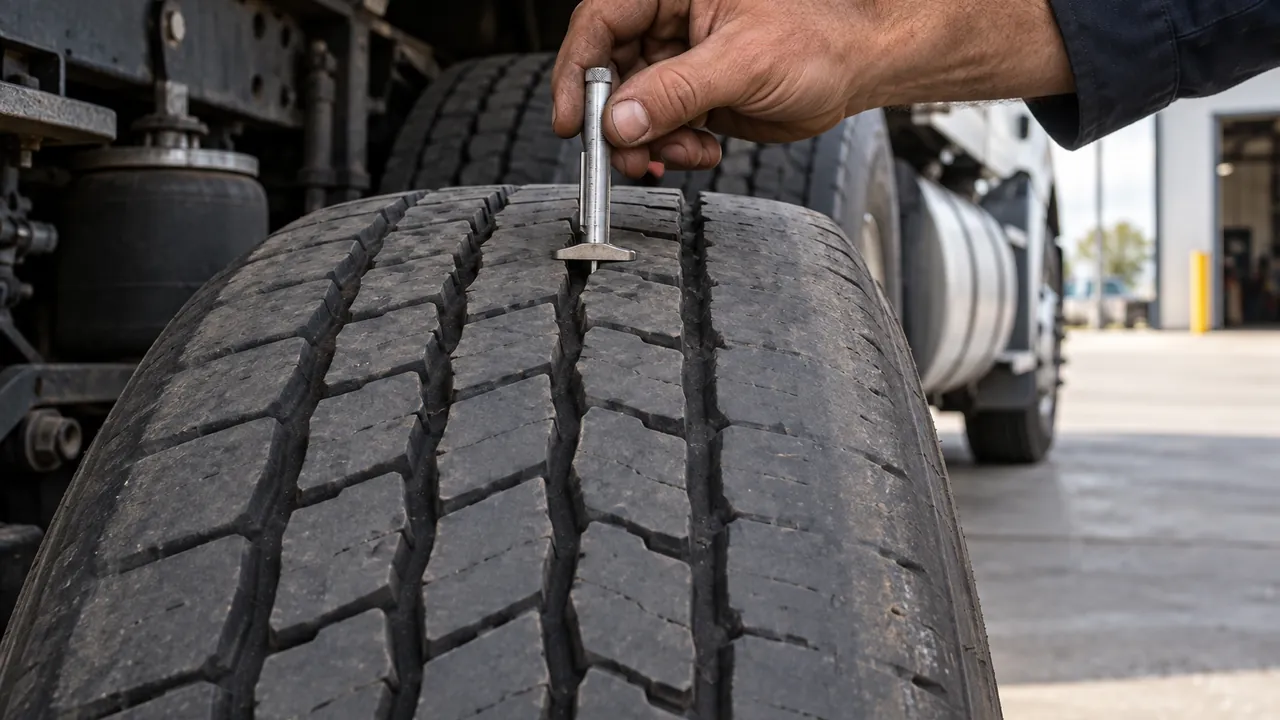
If the carrier requires drivers to take tread measurements, use the specified tool and method. Record the readings, the wheel position, and where each reading was taken. A set of numbers without a location is difficult to interpret later. Follow the carrier's instructions for checking inflation as well, including the relevant equipment information and the conditions under which a reading should be taken. Do not invent a pressure target based only on a sidewall marking or a number remembered from another vehicle.
A measurement is useful when somebody else can understand how it was obtained. Note the date, whether the tire had recently been running, and any limitation that affected the check. If a gauge appears damaged or gives an unexpected result, do not keep repeating the test until it produces a preferred number. Arrange a reliable check through the normal maintenance channel. Questions about acceptable readings, service limits, or the relationship between pressure and load belong with qualified personnel and the applicable manufacturer information.
Make the maintenance report easy to locate
Use the carrier's wheel-position terminology so that the technician knows exactly which tire the note describes. Include the tractor or trailer identifier, not just the driver's current route or load number. If permitted photographs are helpful, take them while safely parked and include enough context to identify the position. A close-up can show tread detail, while a wider view can establish which wheel is involved. Avoid photographs that capture another customer's documents, restricted operations, or people who have no connection to the defect report.
Keep the wording factual: “outer shoulder appears more worn than the center” is generally more useful than “alignment is bad” when no alignment check has been performed. If an unusual sensation or vibration was noticed while driving, describe when it occurred without trying to prove that the tire caused it. Several different systems can produce similar symptoms. A maintenance record should distinguish what the driver observed from what a technician later confirmed.
Do not confuse monitoring with clearance to operate
Some wear conditions require immediate action, while others may be managed through an established maintenance plan. The driver should not make that distinction from an online article alone. Where there is visible damage, a suspected unsafe condition, or uncertainty about the vehicle's fitness, follow the carrier's stop-and-report procedure and obtain appropriate direction. A note saying “watch it next week” is not a substitute for an authorized service decision. The same applies when a tire looks better in a photograph than it does in person.
The Michelin Truck Tire Service Manual provides detailed technical material intended to support proper tire care. It is a reference to consult alongside the carrier's maintenance procedures and the correct information for the equipment. A driver can use such resources to ask more precise questions, but should not extrapolate a repair method, rotation instruction, or continued-service decision from a superficially similar example.
Follow the issue through the next inspection
After maintenance reviews the report, retain the outcome in the approved system. That might be an inspection, a scheduled repair, an equipment restriction, or another documented instruction. On the next relevant check, look at the same position and report a meaningful change. Comparing observations is easier when the original note identified the location clearly and used consistent language. Without that continuity, each new driver or technician may be forced to begin the investigation again.
Uneven tire wear is most useful as an early signal, not as a puzzle the driver must solve alone. A safe inspection position, clear observations, properly recorded measurements when required, and a complete maintenance handoff turn that signal into an actionable record. The goal is not to become a tire specialist between loads. It is to make sure that a visible change reaches the people who can assess it before the condition is ignored, misidentified, or allowed to become a more serious problem.