
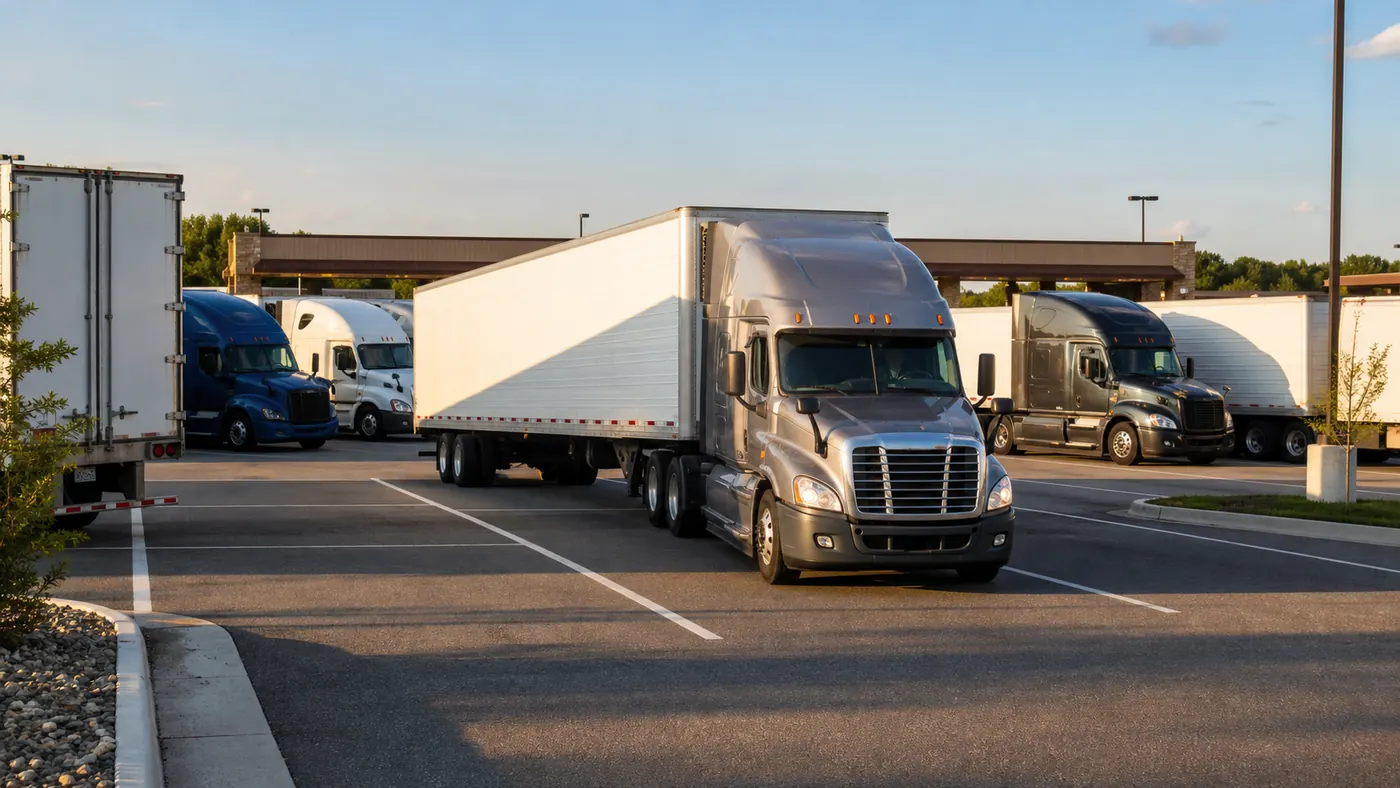
A parking space can look generous from the access road and awkward once the tractor is committed to the turn. The difficulty may be a vehicle beside the entrance, an object at the rear or a departure route that the driver has not yet considered. A useful parking plan begins before the maneuver. It connects the visible space, the truck's actual dimensions and the carrier's trained procedure, leaving room to stop and reassess when the picture changes.
Look at arrival and departure together
Assess the route into the parking area and the route back out. A place that allows the tractor to enter may leave insufficient room for the combination to leave when neighboring spaces fill. Consider the position of fixed objects, marked traffic flow and other users of the area. Follow site rules and the carrier's training for the vehicle being driven.
A simple planning exercise helps develop this habit. On a sketch of a familiar yard, mark an arrival path and a departure path separately. Then add a parked vehicle at the most restrictive point. The exercise reveals which part of the plan relied on space that was never guaranteed to remain available.
Treat the whole combination as the vehicle
The front of the tractor is only one part of the movement. A driver also needs awareness of the trailer, its corners and the space affected by the maneuver. Training should establish how to assess these areas for the actual equipment. A plan copied from a different trailer length or tractor configuration may not describe the same movement.
When taking unfamiliar equipment, review the relevant dimensions and operating instructions before relying on memory. The FMCSA Large Trucks and Buses Safety resources explain broader issues around commercial vehicle visibility and space. Use those resources alongside supervised practice and the carrier's vehicle-specific procedures.
Reassess when the view changes
A pedestrian, another vehicle or an opening door can change a previously clear area. Build observation and reassessment into the maneuver instead of treating the initial check as permission to complete it regardless of new conditions. If the intended movement cannot be confirmed as clear, stop and use the procedure taught by the carrier.
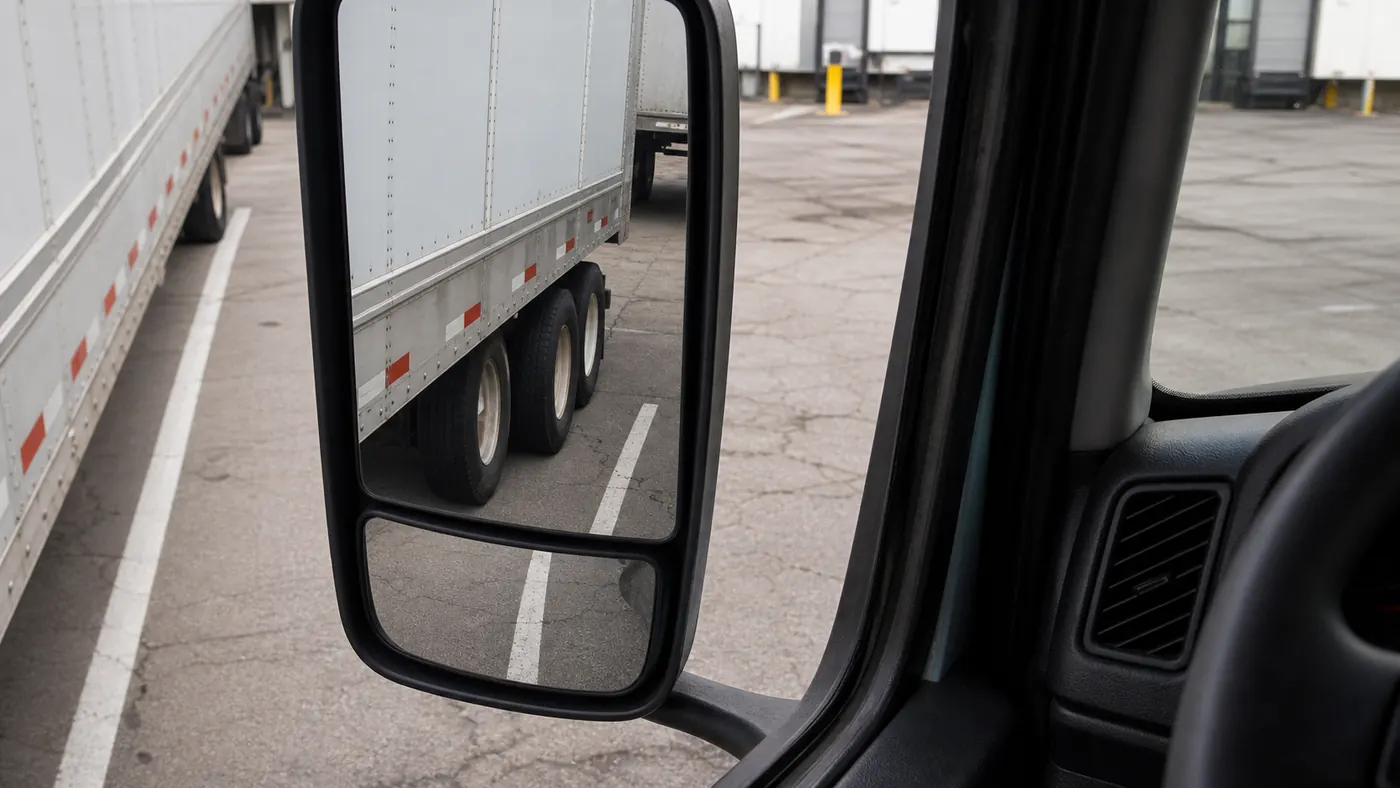
A frequent planning mistake is to keep solving the original picture after the environment has changed. In a fictional yard exercise, the space is clear at the first observation, but a service van stops behind the neighboring trailer. The correct discussion is about the revised conditions. The earlier clear view no longer answers the current question.
Agree how a spotter will communicate
Where a trained spotter is used, agree the signals, roles and stopping procedure before movement begins. Follow the carrier's policy, including what to do when communication or visual contact is lost. The spotter's presence does not remove the driver's responsibility to stop when the situation is uncertain.
Discuss the route with the spotter in concrete terms. Identify the intended space and the boundaries that matter. A vague request to guide the driver back leaves too much assumed. During training, ask both people to explain the plan separately. If their descriptions differ, resolve the difference before attempting the maneuver.
Keep outside pressure out of the assessment
A queue behind the truck can make an incomplete plan feel urgent. The driver still needs an appropriate opportunity to evaluate the space and use the correct procedure. Dispatch should understand that reaching the parking facility is an intermediate step. It does not mean the vehicle is already parked and available for another task.
For example, a receiver might ask a driver to wait in a space that has become obstructed by another unit. Report the actual obstruction and request a suitable alternative through the site contact. Avoid accepting a description such as everyone fits there as evidence that the current combination can use the current space.
Debrief a difficult attempt in useful terms
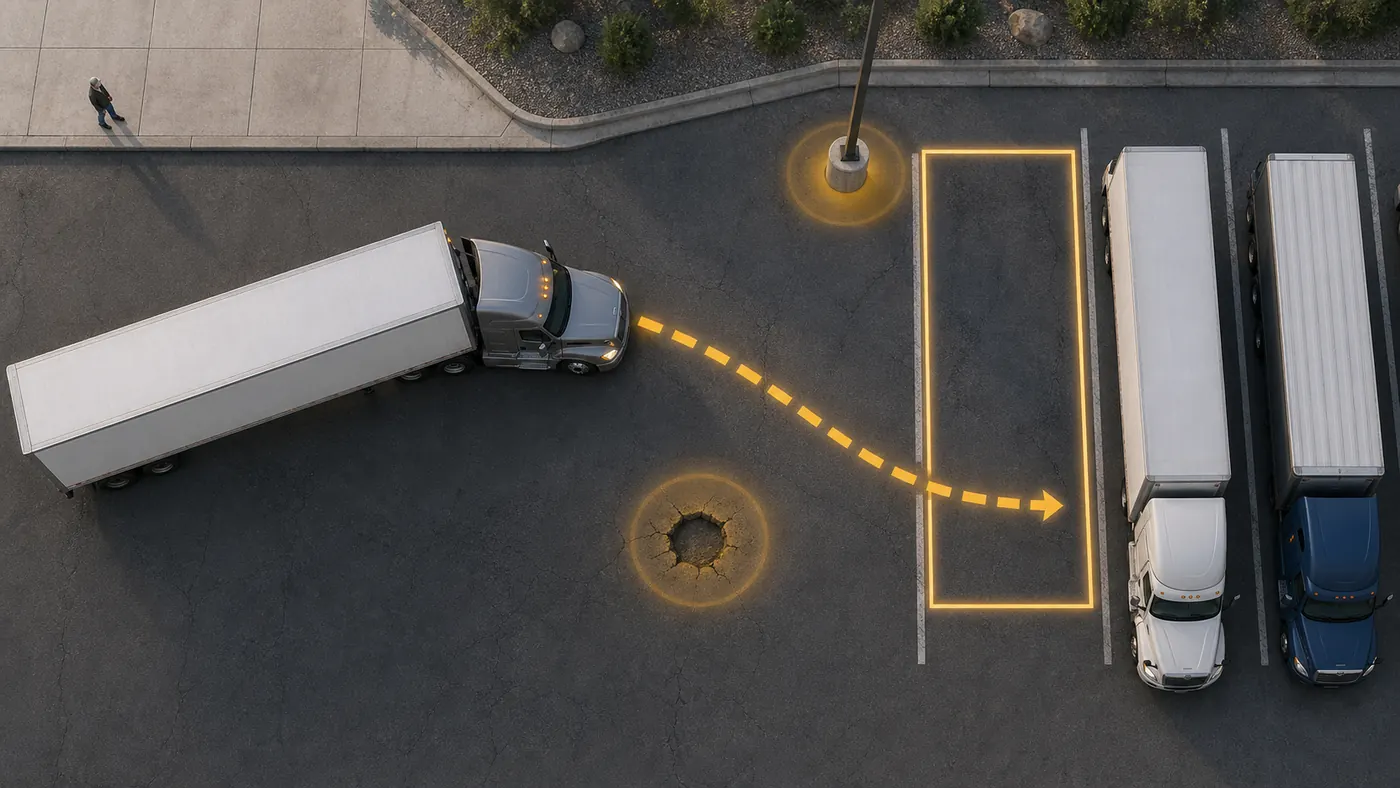
After a supervised exercise or a completed visit, discuss the point at which the plan became difficult. Was the approach too narrow, the initial position unsuitable or an obstacle missed? Specific observations help an instructor identify what to practise. Saying the driver needs more confidence may describe a feeling without explaining the movement.
The FMCSA Motor Carrier Safety Planner is an additional operational reference. Keep training records connected to the task and equipment involved. A driver who practises with one configuration should be able to explain what requires reassessment when the equipment or site changes.
Build a personal site note that helps the next visit
Afterward, record a few factual details if the carrier maintains a location library. Note the designated entrance, the location of the parking area and a permanent feature that made the approach difficult. Date the observation and identify a temporary obstruction as temporary. A site note should improve preparation without pretending to guarantee future space.
Review the note before a return visit, then compare it with the actual conditions on arrival. An entrance may have been rebuilt, a traffic direction reversed or an adjoining area closed. Good preparation makes those differences easier to notice. The goal is a parking process in which the driver can explain the intended movement, recognize when conditions no longer match it and take time to establish a workable plan.
## Compare a daylight plan with a later arrival
An arrival discussed during daylight may occur after the site has changed operating mode. Ask whether the same entrance, lighting and staff arrangements apply at the booked time. A driver familiar with daytime visits should still confirm the evening process, especially when another tenant controls a shared entrance. For a training discussion, use a sketch with a fixed obstacle and a temporary parked vehicle. Explain how the assessment would be checked again on arrival. The useful skill is noticing changed conditions and establishing an appropriate plan, with instruction suited to the actual vehicle and site.